A quick definition
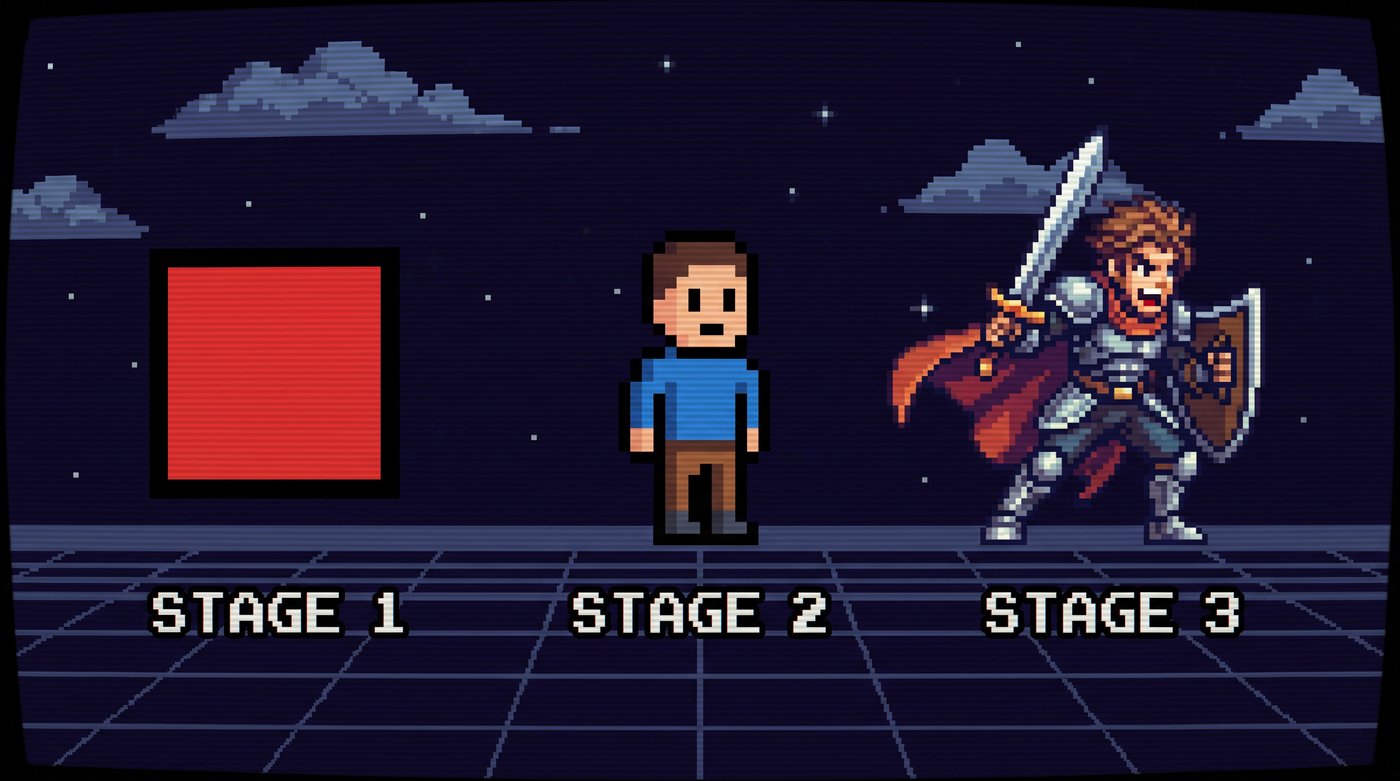
Programmer art is game art created by a programmer rather than a trained artist. It's typically rough, simple, and made quickly to serve a practical function: getting an asset into the game so the programmer can test gameplay without waiting for real art.
The term covers everything from 2D stick figures and magenta texture errors to 3D boxes with default materials. What all of it has in common is that function comes first, and aesthetic finish is an afterthought.
Programmer art isn't "bad art." It's art made under specific constraints: no art training, limited time, and the sole purpose of testing gameplay. Evaluating it by professional art standards misses the point.
Where the term comes from
The phrase has been in use in game development circles since at least the 1990s. It gained broader visibility with the rise of indie game development in the 2000s, when solo developers and small teams without dedicated artists started releasing games publicly.
Early indie hits like Minecraft, Dwarf Fortress, and RimWorld forced the wider audience to confront a question that developers had been asking for years: does a game need "professional" art to be good? The answer turned out to be no — as long as the art communicates clearly and the gameplay delivers.
Common forms of programmer art
Programmer art looks different depending on the type of game and the tools used. Here are the most common varieties:
2D programmer art
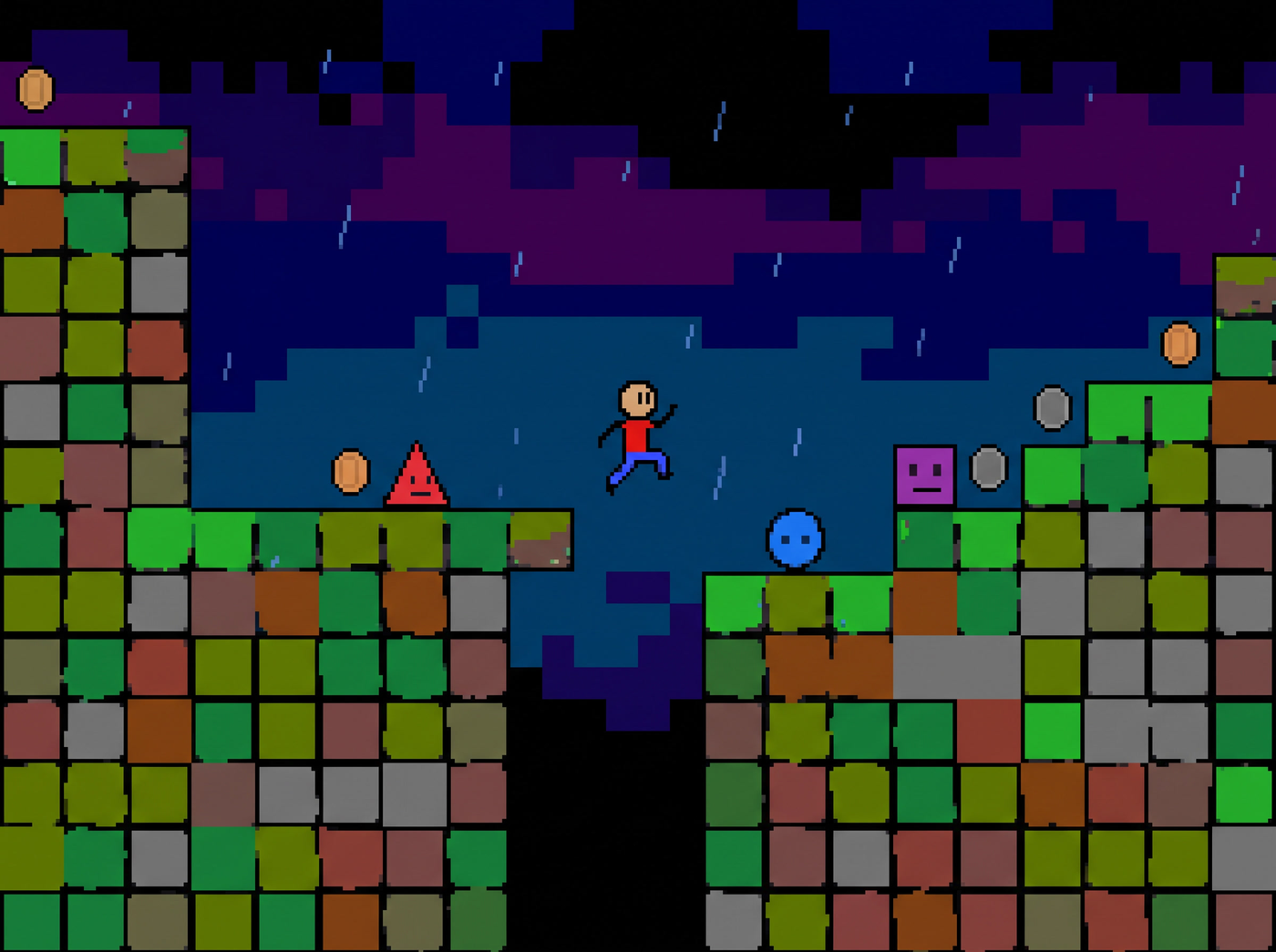
- Stick figures — simple character sprites made from basic lines and shapes
- Colored rectangles — platforms, items, and characters represented as simple shapes
- Rough pixel art — blocky 16x16 or 32x32 sprites with limited detail
- Text and numbers — top-down games where everything is represented by ASCII characters or single digits
- Whiteboard sketches — scanned or digitally drawn rough concepts used as temporary sprites
3D programmer art
- Default primitives — cubes, spheres, capsules, and cylinders straight from the engine
- Magenta missing texture — the famous purple/pink error texture that appears when an asset isn't properly assigned
- Checkerboard patterns — default material textures used as placeholders
- White/grey box models — rough blockouts of level geometry with no detail
- Primitive combinations — more complex shapes made by stacking simple primitives
Why programmer art exists
Programmer art isn't a mistake or a sign of laziness. It exists because of practical realities in game development:
- Gameplay comes first. You need to know whether jumping feels right before you worry about what the jumper looks like. Programmer art lets you test mechanics immediately.
- Art direction changes. If you're still figuring out the game's visual style, creating polished assets early is wasted work. Placeholder art is disposable by design.
- Small teams don't have artists. Solo developers and tiny studios simply don't have a dedicated artist on the team. Someone has to make the assets, and that someone is usually the programmer.
- Prototyping speed matters. In a game jam or early prototype phase, the fastest way to get something playable is to use whatever you can make in five minutes.
- Communication tool. Programmer art can show an artist what you need more clearly than a written description. "Make something that does what this box does" is easier to understand than a paragraph of text.
From punchline to aesthetic
For most of game development history, programmer art was something to be ashamed of — something you hid from players and replaced as soon as possible.
That started to change with the indie game boom. Games like Minecraft proved that a distinct visual style, even one born from technical constraints, could become a game's most recognizable feature. Dwarf Fortress took it further, building a dedicated fan base that preferred the ASCII graphics over any graphical overhaul.
Today, many indie developers deliberately embrace a rough, low-fi aesthetic. Some of them are programmers making the best art they can. Others are trained artists deliberately adopting a "programmer art" style because it fits their game's tone and nostalgia value.
How to make programmer art that actually works
If you're a programmer making art for your game, the goal isn't to become a great artist. It's to make art that communicates clearly, doesn't distract from the gameplay, and maybe even has a bit of charm.
Here are the most important principles:
1. Be consistent
A consistent mediocre style looks better than an inconsistent mix of good and bad assets. Pick a palette, a resolution, and a way of drawing things, and stick to it. The viewer's eye fills in the gaps.
2. Prioritize readability
Players need to instantly know what everything is and whether it's helpful or harmful. Use color coding, shape language, and silhouette — all the same principles professional artists use, just applied to simpler forms.
3. Use constraints as style
Instead of trying to hide that this is programmer art, lean into it. Frame it as retro, minimal, or geometric. Establish a visual language and commit to it.
4. Let the engine help
Shaders, lighting, post-processing, and particle effects can do a huge amount of heavy lifting. A simple model with good lighting and post-processing looks dramatically better than the same model with default settings.
5. Steal from the best
Look at games with famously limited art — Superhot, Minit, Thomas Was Alone, VVVVVV — and study how they make simple shapes expressive. You'll notice the same patterns: strong silhouettes, clear color coding, and motion that tells a story.
When to replace programmer art
Not all programmer art should stay in the final game. Knowing when to replace it is an important skill:
| Situation | Keep it | Replace it |
|---|---|---|
| Game jam prototype | ✓ | |
| Core gameplay still changing | ✓ | |
| Deliberate low-fi aesthetic | ✓ | |
| Selling at full price | ✓ | |
| Players confused by assets | ✓ | |
| You have an artist on the team | ✓ | |
| Marketing screenshots look bad | ✓ |
Frequently asked questions
Is programmer art an insult?
Can you make a successful game with programmer art?
How do I get better at making art as a programmer?
What's the difference between programmer art and pixel art?
Check out the art techniques guide for practical step-by-step methods, or follow the structured learning path to build your skills from scratch.